Stencil Technology for Haptic Effects
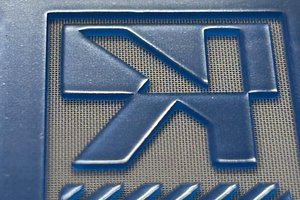
Stencil Technology for Screen Printing Braille, Tactile Elements and Haptic Effects
Screen printing must focus on its strengths in order to remain competitive in the future. Challenges such as the technical implementation of haptic effects, Braille lettering and tactile elements for identification purposes are therefore ideal fields of application for screen printing.
Important components for this include suitable stencil technology and printing varnishes that meet the requirements (usually UV varnishes).
The following information is intended to share our findings and experience with everyone interested in stencil technology for this fascinating field.
Mesh Selection
The most important basis for such a printing task is selecting the right mesh. The main issue is as follows: the coarser the mesh, the poorer the resolution of the stencil.
The finest required resolution for Braille dots and tactile elements is a dot diameter or line width of 1.5 mm. However, the transfer of the printing medium increases with mesh thickness and the theoretical ink volume determined by the mesh geometry.
The coarser the mesh selected, the more printing medium is transferred.
First, it is important to distinguish whether Braille dots, tactile warning symbols or a combination of both are to be printed.
If only Braille dots are to be printed, a 21-140 Y mesh is recommended. With such a coarse mesh, Braille dots can be reproduced optimally in terms of their diameter (standard: 2 mm) and precisely circular geometry.
Build-up thicknesses of up to 0.3 mm and more are not a problem when the right capillary film or coating technology is used.
When printing tactile warning symbols only, a 21-140 Y mesh is difficult to use in terms of mesh geometry. This applies both to the resolution (standard: 1.5 mm line diameter) and to the poorer release characteristics during the printing process (smearing).
A 32-70 Y mesh with adapted coating technology is therefore recommended. With the appropriate capillary film and stencil build-up thickness, printing-medium build-up thicknesses of 0.2 mm to 0.3 mm are readily achievable with this mesh.
If Braille dots and tactile warning symbols are to be printed using one stencil, the 32-70 Y mesh is also recommended, as it offers the best technical compromise.
Coating Technology
Once the appropriate mesh geometry has been selected, the coating technology must be applied in such a way that good release characteristics of the printing medium are ensured.
The wet-on-wet coating technique is one effective option. For example, with a 32-70 Y mesh, a 2-3 or 2-4 coating is recommended. When used with a suitable high-viscosity capillary film, this can achieve build-up thicknesses (EOM = emulsion over mesh) of 250 µm to 300 µm and more.
These stencil build-up thicknesses are optimal for the printing process. A build-up of more than 300 µm over the mesh does not make technical sense and causes problems during continuous printing (smearing or poor release characteristics).
Another option is to apply a 200–300 µm-thick capillary film using the wet-transfer process.
After drying, it can additionally be combined with or anchored by a suitable emulsion coating applied from the squeegee side. Build-up thicknesses (EOM) of 200 µm to 300 µm are also possible in this case.
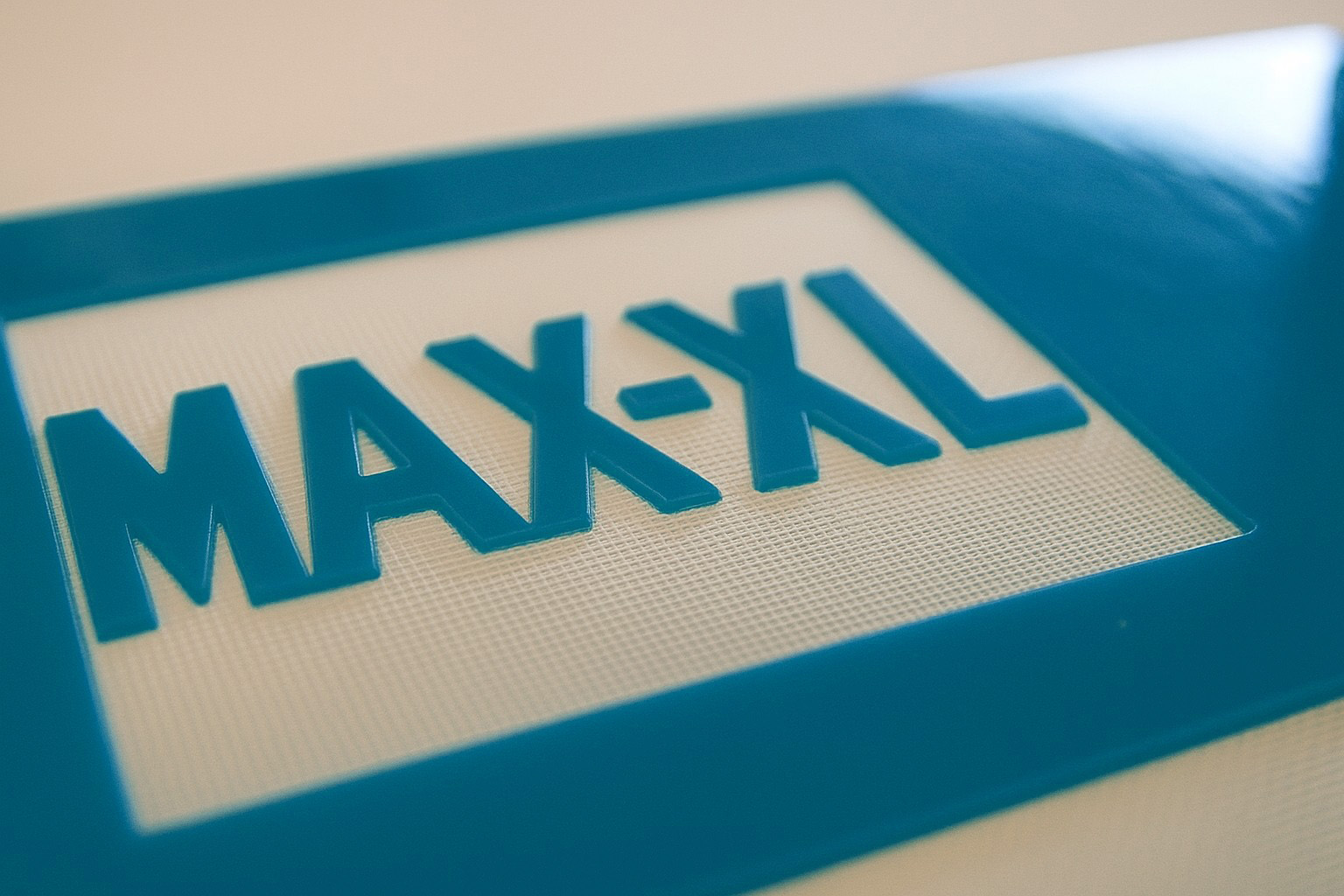
We recommend the POLYCOL MAX-XL for the emulsion coating.
It is a highly viscous, highly reactive, single-component capillary film for very high stencil build-up thicknesses of up to 1,000 μm when directly coating coarse screen-printing meshes (8–43 threads/cm).
For the capillary-film option described above, an ULANO CDF QT Thickfilm in combination with ULANO QTX capillary film is also recommended.
All of these options must be adapted and tested according to the specific operating processes and requirements.
The diverse field of haptic effects can be explored to great advantage using the technical capabilities of screen printing.
A wide variety of surface structures can be produced with the appropriate stencil technology and printing medium.
The range extends from imitations of leather, sticky jam and wood structures to sandpaper and many other possibilities.

Bird-friendly glass – protection that remains almost invisible
Selective magnetron sputter coating creates UV-reflective structures on architectural…
When Innovation Meets Outstanding Real-World Performance
A standout example comes from ScreenSet in Pune, India, who tested POLYCOL® MAX-XL, a…
Preconditions for reproducible quality and low failure rates.
Kissel + Wolf offers a wide range of products for manual and automated cleaning.
Printed Heaters – Flexible Thin-Film Heating Systems for Modern Applications
Printed heaters – also known as heating foils or thin-film heating systems…
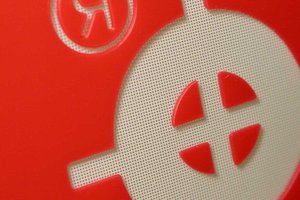
Stencil Technology for Screen Printing Braille, Tactile Elements and Haptic Effects
Screen printing must focus on its strengths in order to remain…
Press

Press Contact
Please feel free to reach out to our marketing department for any media inquiries, press releases, or marketing-related requests.
We look forward to hearing from you.
Laura Haas
+49 6222 578-148
laura.haas@kiwo.de